The Yamaha XMAX 125 is among the best-selling GT scooters on the French market. Its 125 cm³ single-cylinder engine develops a power level regulated by law, which sets a precise framework for its top speed. The break-in period, often summarized as a formality by forums, actually engages the longevity of the engine well beyond the first kilometers.
Engine RPM and Piston Ring Wear: What Really Happens During Break-In
The break-in period does not only concern the cylinder-piston assembly. The rings, crankshaft, belt transmission, and even the brake discs undergo a phase of mechanical adjustment. During the first kilometers, the micro-roughness of the metal surfaces erodes each other to create optimal contact.
On a single-cylinder engine like that of the XMAX 125, the quality of this contact between the rings and the sleeve directly conditions the sealing of the combustion chamber. A hasty break-in leaves irregular friction zones, which can lead to excessive oil consumption over the long term and a gradual loss of compression.
Field reports vary on this point: some owners report a perfectly healthy engine after a cursory break-in, while others notice persistent vibrations or abnormal oil consumption after a few thousand kilometers. The main variable remains the consistency of engine RPM during the initial phase, more than the speed displayed on the speedometer. Understanding the maximum speed and break-in of the XMAX 125 allows for adjustments in driving habits right from the dealership.
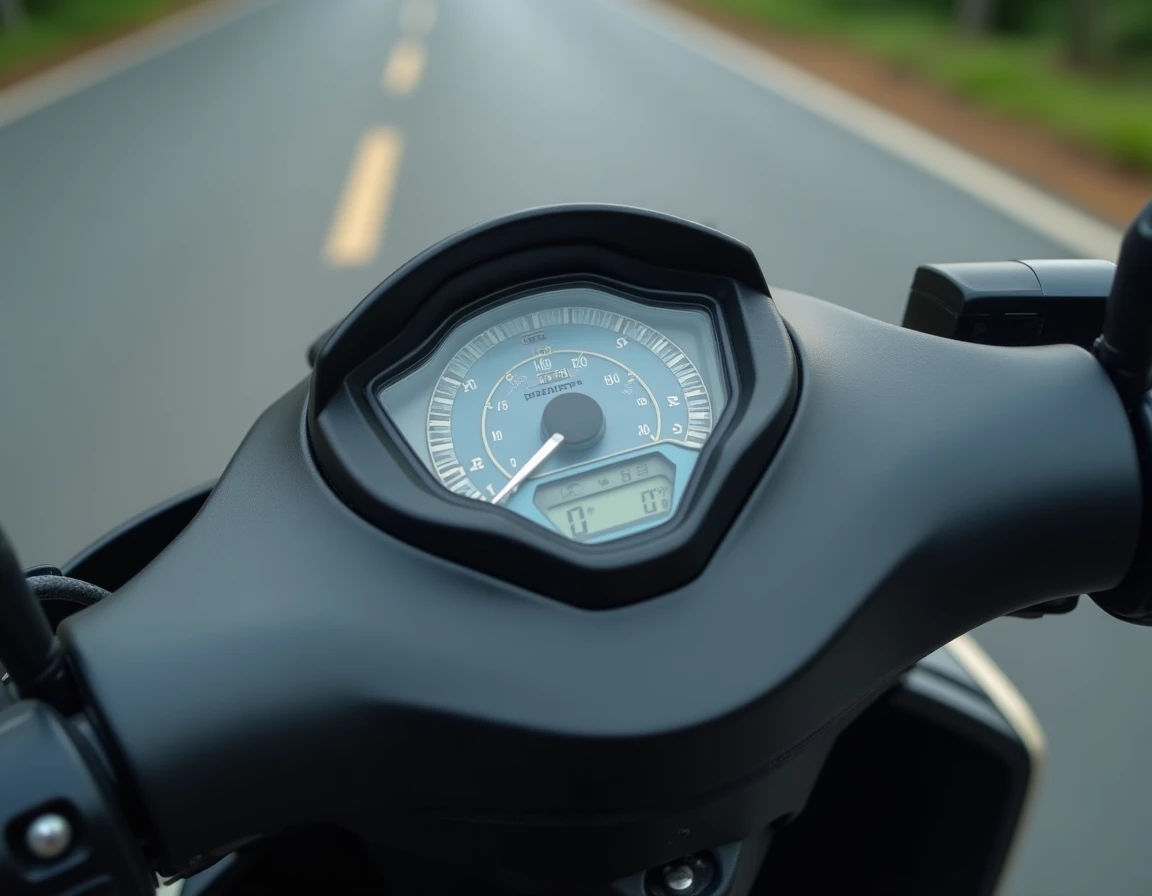
Break-In Stages of the XMAX 125: The Thresholds to Respect by Kilometer Range
The manufacturer recommends a break-in with progressive stages. The principle is simple: gradually increase the allowed engine RPM as the kilometers accumulate.
- During the first few hundred kilometers, the RPM should remain moderate. This does not mean driving slowly, but rather avoiding sudden acceleration and prolonged full-throttle phases.
- Beyond this initial phase, the rider can demand more from the engine, varying the RPM rather than maintaining a constant speed on the highway or fast lane.
- The scheduled technical inspection around 1,000 km includes an engine oil change that removes the metallic particles generated during break-in. Skipping this step means allowing micro-shavings to circulate in the lubrication circuit.
Recent sources specify that the XMAX 125 reaches its full mechanical maturity around 1,500 km, beyond the often-cited threshold of 1,000 km. Up to this point, the engine gains flexibility and efficiency in a noticeable way.
Varying RPM Rather Than Limiting Speed
A common mistake is to drive systematically at low RPM throughout the break-in. This approach prevents the rings from working across their entire operating range. The most effective break-in alternates brisk accelerations (without hitting the rev limiter) and phases of engine deceleration, in order to stress the parts under varied conditions.
Riding in the city paradoxically offers better break-in than a highway journey at a fixed RPM. Stops, restarts, and speed variations impose exactly the type of stress the engine needs to break in evenly.
Maximum Speed of the XMAX 125: What the Regulations Actually Allow
The maximum speed of an XMAX 125 is around 110 to 115 km/h on the speedometer. This figure does not result from arbitrary restrictions by Yamaha, but from French regulations that limit 125 cm³ engines to 15 hp of maximum power. The engine is designed to comply with this limit from the factory.
In practice, the actual speed is a few km/h lower than the speedometer reading, a common discrepancy in two-wheelers. The XMAX 125 comfortably rides between 90 and 100 km/h on fast roads, but beyond that, the single-cylinder reaches its limits and vibrations increase significantly.
De-restricting the XMAX 125: A Major Legal and Financial Risk
The temptation to push this limit exists, particularly through reprogramming or mechanical modifications. The consequences far exceed the scope of a traffic fine.
A de-restricted XMAX 125 immediately loses its homologation. The scooter is no longer compliant with its type approval and thus operates illegally, even if no radar checks detect it. In the event of an accident, this situation has direct repercussions.
- The insurance may completely disengage, leaving the owner solely responsible for material and bodily damages, including those suffered by third parties.
- The Yamaha manufacturer’s warranty is void as soon as an unapproved modification is detected, whether the incident is related to the de-restriction or not.
- Criminal charges are possible if third parties are injured in an accident involving a vehicle that does not comply with its homologation.
The speed gain obtained (a few extra km/h at best) does not justify a financial exposure that can reach tens of thousands of euros in the event of a serious bodily injury.
Engine Oil and First Oil Change: The Detail That Changes Lifespan
Engine oil plays a central role during the break-in. The metallic particles from the break-in are suspended in the lubricant from the very first kilometers. The longer these residues remain in the circuit, the more they accelerate the wear of the parts they are supposed to protect.
The Yamaha manual provides for a first oil change at the 1,000 km mark. Some specialized mechanics recommend an earlier intermediate oil change, around 500 km, to remove the bulk of the residues before they circulate for too long. The additional cost is modest compared to the potential mechanical benefit.
The choice of oil also matters. An oil with a viscosity that meets Yamaha specifications ensures a lubricating film suitable for the tight tolerances of a new engine. Using oil that is too thin or too thick during this phase compromises the quality of the break-in, even if the engine RPM is perfectly managed.
An XMAX 125 that has undergone a rigorous break-in, with oil changes respected and varied RPMs, maintains its performance and efficiency well beyond the 30,000 km mark. The engine does not do everything, but the first 1,500 km lay the mechanical foundations for everything that follows.