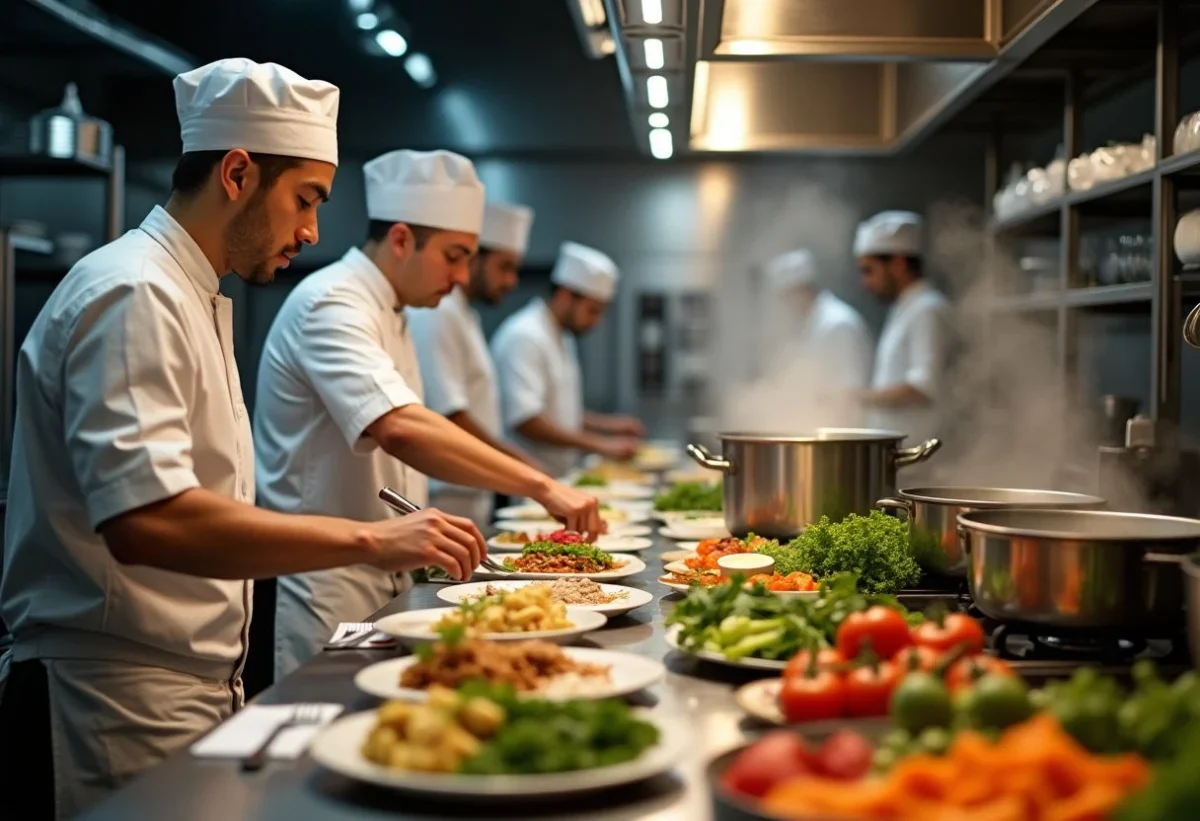
In the restaurant sector, where every minute counts, the right choice of equipment can transform the efficiency of your kitchen. Whether you are a seasoned restaurateur or an ambitious novice, understanding the importance of the right equipment is essential to ensure the quality and speed of your services. The world of restaurant equipment is vast and fascinating, encompassing a variety of essential tools that determine the success of an establishment.
Essential Kitchen Equipment
Every professional kitchen requires a set of indispensable basic equipment to ensure effective and flawless culinary preparation. These well-chosen tools can make all the difference between smooth service and a logistical nightmare.
Elements such as professional ovens and cooktops are the beating heart of any productive kitchen. They must be sturdy, reliable, and suited to your production volume. Industrial refrigerators and cold rooms are essential for maintaining the freshness of ingredients.
The choice of this equipment should be guided by the type of menu offered and the number of covers served daily.
The Importance of Utensils and Small Equipment
While large equipment often attracts attention, small equipment and utensils are the glue that holds any professional kitchen together. They ensure precise preparation and impeccable presentation of each dish.
- Chef knives: A good knife is a chef’s ally for preparing, slicing, and cutting with precision.
- Pots and pans: Different sizes allow for appropriate cooking according to the necessary portions.
- Mixers and blenders: Necessary for diversifying preparations, from purees to sauces.
- Bowls and salad bowls: Used for mixing ingredients or elegantly presenting dishes.
Investing in quality utensils may seem costly, but it ensures longevity and consistent performance.
Space Optimization and Ergonomics
In a professional kitchen, space layout is a key element. Good organization facilitates teamwork, reduces the risk of accidents, and improves overall efficiency.
The restaurant equipment should be arranged to optimize movement and interactions between different workstations.
Stainless steel shelves are ideal for storage, as they resist heat and humidity.
Work surfaces should be at an ergonomic height to avoid back pain, often caused by uncomfortable and repetitive positions.
Maintenance and Durability: A Long-Term Investment
To ensure optimal performance of your kitchen equipment, regular maintenance is a necessity. It’s not just a matter of longevity, but also of food safety and compliance with health standards.
- Conduct regular inspections to detect and resolve issues before they worsen.
- Follow the manufacturer’s recommendations for maintenance.
- Train your staff on proper usage and cleaning practices.
- Keeping a maintenance log can help plan repairs and replacement of parts.