French law turns a blind eye to presidential adultery: no law, no special status. Yet, each revelation of infidelity at the highest level of the State triggers a shockwave, shakes the trust in those meant to embody authority, and exposes the tension, never truly resolved, between the secrecy of private lives and the demands for transparency imposed on the highest office.
When the intimate secrets of presidents become public, society as a whole is left questioning the boundary between political legitimacy and personal behavior. These stories, far from being mere anecdotes, raise the issue of the moral coherence expected from leaders and lay bare the contradictions in our relationship with authority.
Presidential adultery: a persistent taboo at the heart of power
No one emerges unscathed from overexposure, especially in the circles of power. The private life of political figures remains a slippery ground, and the subject of presidential adultery has never really left the headlines, constantly swinging between facade discretion and expectations of transparency. The media watches, scrutinizes, documents every misstep, revealing the tensions of a society that fascinates and then judges, sometimes in the same minute. This paradox has fueled political commentary for years, prompting the Republic to continually question the acceptable level of secrecy in democracy.
In this context, Bruno Jeudy has carved out a unique place in political journalism. Born in 1963 in Château-Gontier, he has traversed the largest newsrooms in the country, building a reputation for independence and consistency. His commitment, which led him to leave a newsroom after an editorial disagreement, has made an impression and taken a strong stand in favor of press freedom. Alongside him, Nathalie Lévy, also a journalist, has chosen discretion and rigor, prioritizing the quality of work over media spotlight.
Their story, revealed quietly, is marked by the sobriety that characterizes them. The marriage of Bruno Jeudy and his wife is neither a sensational event nor a flashy storytelling. It is the tale of a partnership where respect for privacy prevails, without ever renouncing shared values. An intimate ceremony, carefully chosen guests, and a fierce determination to sacrifice nothing to the ethics of discretion stand out. Their approach sharply contrasts with the surrounding noise, reminding us that the balance of a public couple often lies in their ability to control their own narrative.
From Mitterrand to Hollande, which scandals have truly shaken French politics?
Here are a few episodes that have left a deep mark on political life:
- The revelation, during François Mitterrand’s presidency, of the existence of his hidden daughter, Mazarine Pingeot. Long kept silent by most media, this information eventually broke at the end of the second seven-year term, reigniting the debate on the place of the private in the public sphere and breaking a decades-old taboo.
- The Julie Gayet affair, which rocked François Hollande’s presidency. The rapid exposure of the relationship between the head of state and the actress demonstrated the accelerating effect of social media and images that circulate at lightning speed. The public, caught between displayed indifference and sometimes poorly concealed curiosity, reflected a shift in the perception of authority figures: today, the demand for sincerity supplants that for secrecy.
Through his works on political life, particularly his analyses of Nicolas Sarkozy or his collaborations with Carole Barjon and Éric Decouty, Bruno Jeudy has captured these transformations. His experience as an investigator and interviewer allows him to grasp the growing permeability between the intimate sphere and the public space, between the person and the function. A persistent question runs through each of his narratives: how far should the veil be lifted on the private lives of those who lead the country?
Between private life and public responsibility: should we rethink ethics at the highest level of the State?
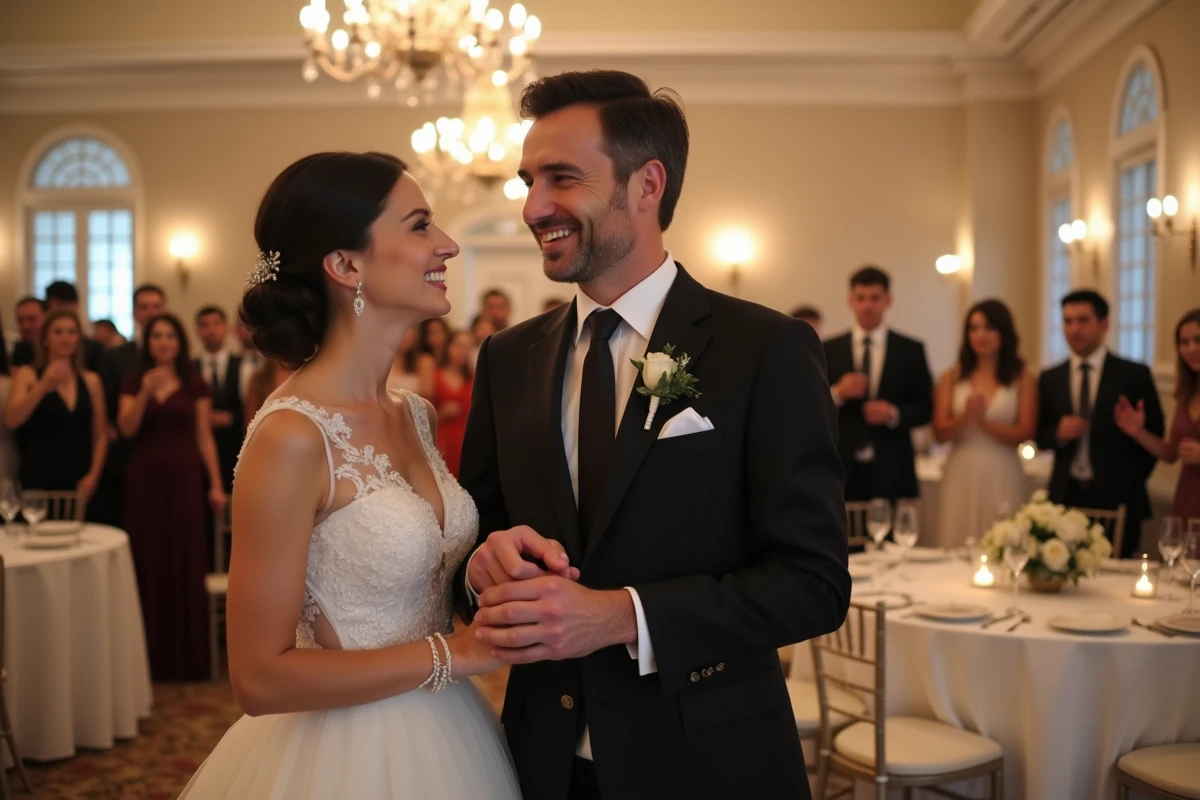
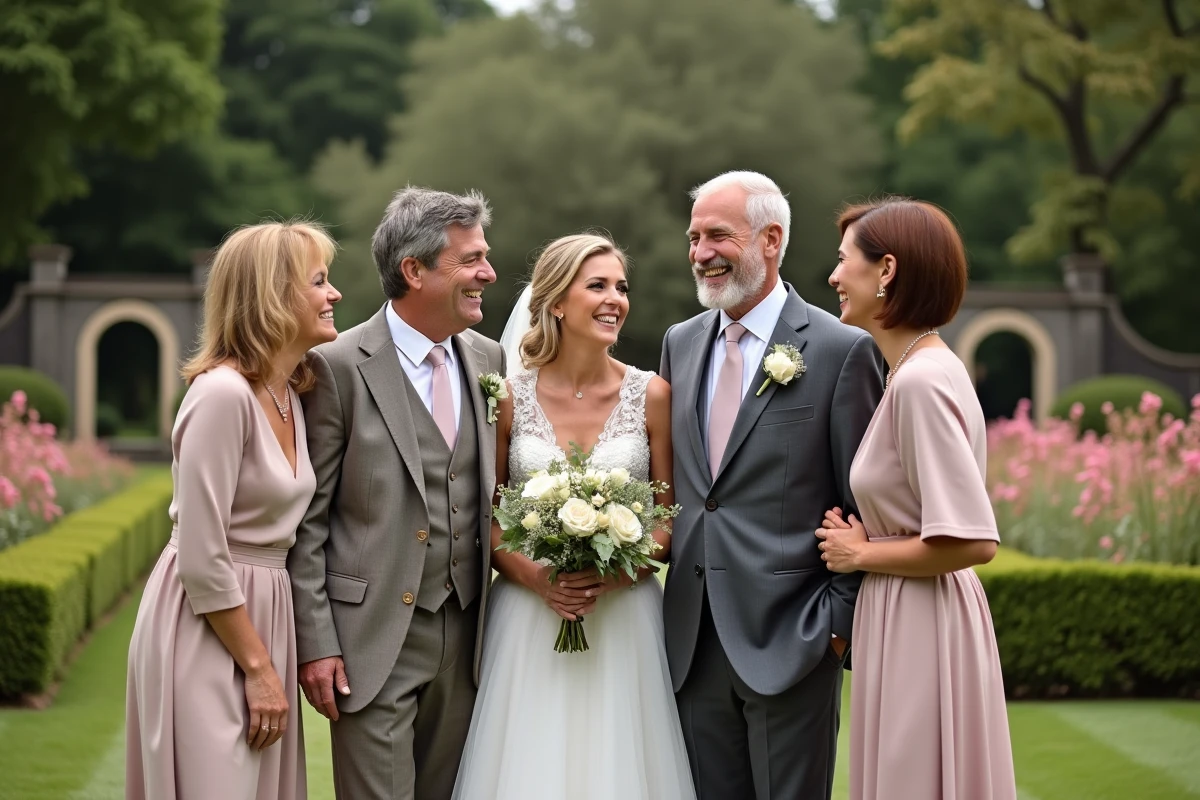
The marriage of Bruno Jeudy and his wife is unlike any other. It is an intimate commitment, made public without ostentation, celebrated away from the cameras. The ceremony, organized on the banks of a river near Paris, brought together a circle of guests including political leaders, seasoned journalists, and influential personalities. Nothing was left to chance: a custom-tailored navy blue suit, a discreet lace dress, a first dance, a final fireworks display. Every detail reflects the desire to combine discretion with high standards.
What stands out is the way the couple connects personal life with ethical reflection. Bruno Jeudy and Nathalie Lévy embody a generation that constantly questions the boundary between private life and the duty of responsibility. Their union is not merely a social event: it openly raises the question of the role model expected from those who inform and comment on current affairs.
Among the guests, several highlighted the couple’s coherence: integrity, civic engagement, independence. They put their notoriety to the service of editorial causes, transmission, and reflection on civil rights. This discreet celebration, far from masking the demand, extends it. Every choice, every statement, every gesture is part of a desire to combine sincerity and exemplarity. In an era where trust is earned through coherence rather than spectacle, their trajectory reminds us that strength sometimes lies in the refusal of noise. The Republic, too, would benefit from drawing inspiration from this.