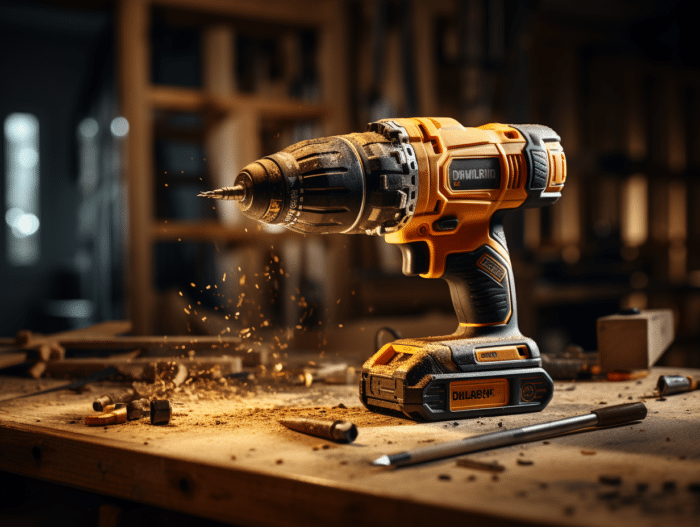
In the field of construction and DIY, the rotary hammer proves to be an essential tool. Its robust design allows it to easily drill through tough materials such as concrete, stone, or metal. Thanks to its pneumatic percussion mechanism, it creates precise and clean holes, facilitating the installation of anchors or passages for electrical and plumbing installations. Models vary in power, features, and accessories, giving users the option to choose the tool that suits their specific needs, whether for occasional work or more demanding projects.
The Fundamentals of the Rotary Hammer in Construction and DIY
The rotary hammer, often confused with the drill, is distinguished by features and a configuration that make it essential in the construction sector. Equipped with superior power and impact capacity, this electric tool transforms drilling tasks into less arduous and quicker jobs, especially when it comes to drilling holes in extremely hard materials.
To understand the advantages of the rotary hammer over the drill, consider its ability to generate powerful impacts thanks to its pneumatic or electromechanical striking system, allowing it to create larger diameter and deeper holes. Some rotary hammer models also incorporate a chisel function, thus expanding their application beyond simple drilling to light demolition tasks.
Professional users often turn to SDS rotary hammers, which feature a shank system allowing for quick and reliable attachment of bits and chisels. With terms like SDS Plus and SDS Max, these systems define not only the type of chuck but also the caliber of compatible tools, thus offering a varied range for specific tasks.
Rotary hammers come in corded or portable versions, each catering to different needs. Corded models provide unmatched power and runtime, ideal for sustained and long-duration work. Portable versions, on the other hand, ensure freedom of movement thanks to their battery power, although this can sometimes reduce available power and require breaks for recharging.

Practical Guide: Choosing and Using a Rotary Hammer Effectively
When faced with various rotary hammer models, selecting the appropriate device requires careful consideration of its features. The SDS system, for example, is a key criterion. With the SDS+ system, the most common, users benefit from quick attachment for bits up to 30 mm in diameter. The SDS Max system, more aimed at professionals, allows the use of bits with diameters up to 52 mm. As for the SDS Top system, it offers an intermediate solution with a shank diameter of 14 mm.
The power and impact energy of the rotary hammer directly influence its drilling capabilities. While an electropneumatic rotary hammer can reach a power of up to 30 joules, essential for heavy-duty work, an electromechanical model often limits itself to a power of less than 10 joules, more suitable for home use. The rotation speed, in turn, affects the capacity and efficiency of drilling, particularly for tasks requiring precise and well-defined holes.
Conveniences such as the presence of a battery for cordless models should be weighed against the need for unlimited runtime offered by a corded rotary hammer. Choosing between a corded rotary hammer and a portable rotary hammer depends on the nature of the work to be done and the necessity for freedom of movement. Remember that using these tools also requires accessories such as bits, chisels, specific chucks, as well as hole saws or wrenches for maintenance.