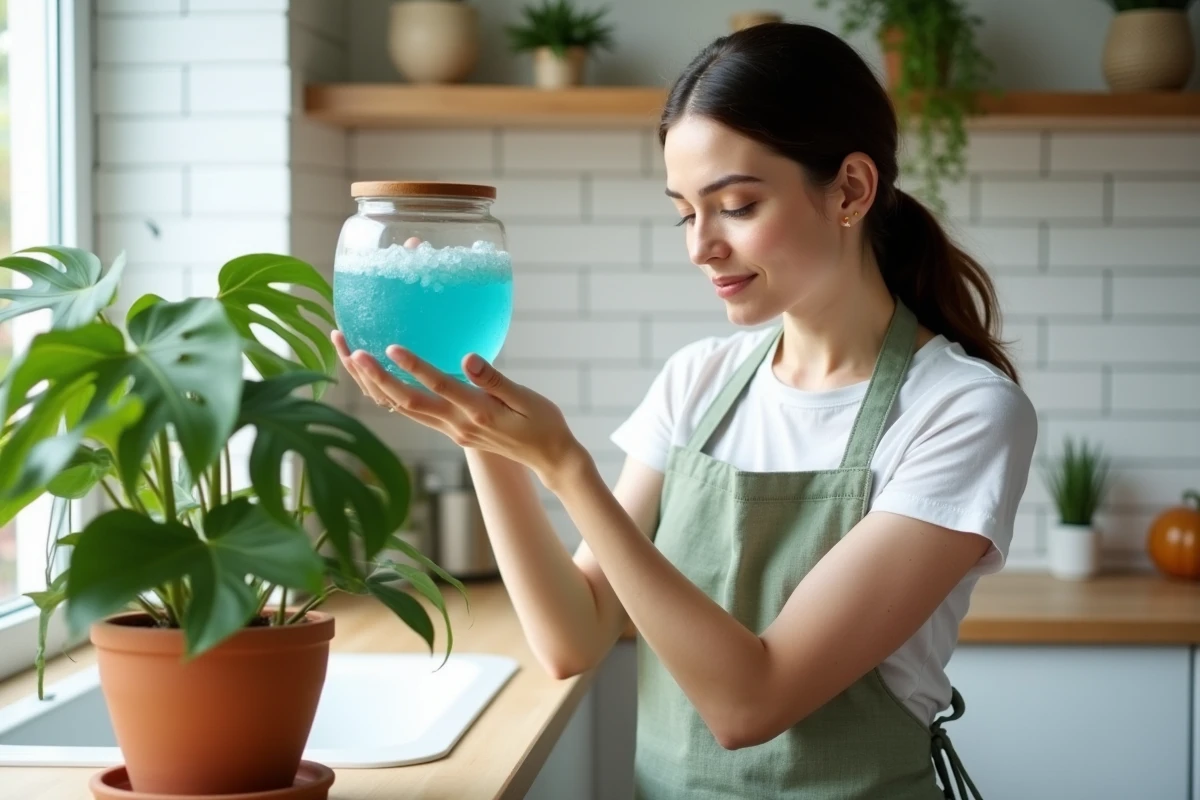
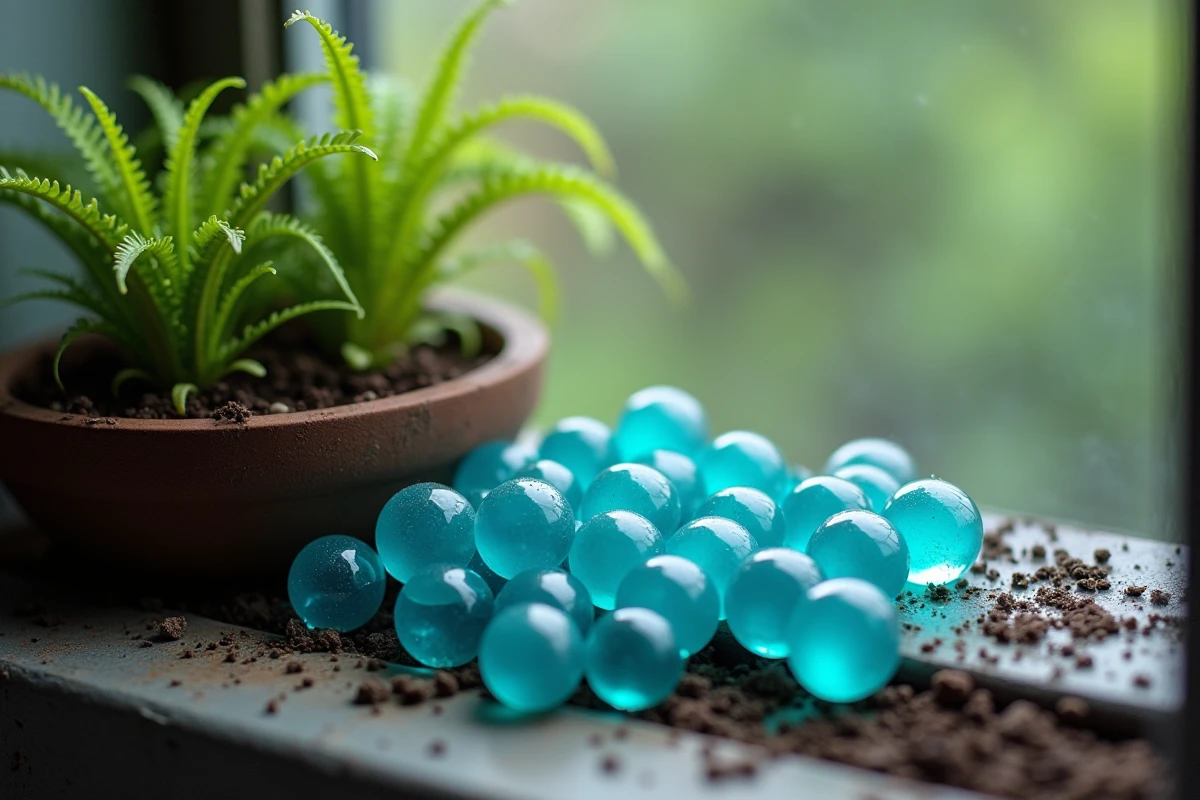
Water beads for plants are superabsorbent polymers capable of storing several times their weight in water, then gradually releasing it back to the substrate. Their principle is based on an acrylamide copolymer that swells upon contact with water, transforming from tiny dry crystals to translucent beads. This mechanism turns each grain into a micro-reservoir integrated directly into the potting soil, changing the way roots access moisture.
Their growing popularity in garden centers masks a more nuanced reality. Between marketing promises and sometimes contradictory field feedback, the subject deserves careful examination of what works, what depends on context, and what these beads will never replace.
Water-air balance in the substrate: the parameter that manuals overlook
Most usage guides recommend mixing water beads into the potting soil before repotting. This advice conceals a rarely detailed technical issue: the ratio of beads to substrate determines success or failure. Too many beads in a compact pot saturate the root zone with permanent moisture, depriving the roots of oxygen.
A terracotta pot, porous and breathable, does not react at all like a waterproof plastic pot. In the latter case, excess water stagnates longer, and the beads amplify this phenomenon instead of correcting it. The choice of container therefore directly conditions the effectiveness of the system.
When deciding to use water beads for plants in a potting soil mix, the grain size of the substrate also plays a role. A fine, peat-based potting soil already retains a lot of moisture by itself. Adding beads in this context effectively doubles a retention mechanism, with a real risk of root rot on sensitive species.
Aerated substrates, enriched with perlite or pine bark, pair better with water beads. Air circulates between the coarse particles, while the swollen beads gradually release their reserve. The water-air balance at the root level remains the decisive factor, much more than the amount of beads added.
Water beads, oyas, clay balls: which passive watering solution to choose
Water beads are not the only option for spacing out waterings. Oyas (porous terracotta jars buried in the substrate), expanded clay balls at the bottom of pots, and self-watering pots serve the same need. Yet, pages that praise water beads rarely compare these alternatives to each other.
Here are the concrete differences that guide the choice:
- Oyas diffuse water by capillarity through their porous wall, without direct contact with the roots. They are suitable for outdoor plants or large containers, but their bulk makes them unsuitable for small indoor pots.
- Clay balls placed as a drainage layer at the bottom of the pot improve aeration and prevent stagnation, without strictly storing water. They complement water beads rather than replace them.
- Self-watering pots offer regular and measurable bottom watering. Their cost is higher, but moisture control is more reliable over time.
- Water beads stand out for their direct integration into the substrate in contact with the roots, which shortens the path between the reserve and the plant. However, their lifespan is limited: they eventually fragment and lose their absorption capacity.
The choice depends on the type of plant, the size of the pot, and the time you can dedicate to maintenance. For medium-sized indoor plants, water beads represent an interesting compromise. For a vegetable garden in a container or outdoor plants, oyas or a drip system remain more suitable.
Real limitations of water beads for plant watering
Experiences vary significantly according to the species grown and the conditions of use. A few limitations deserve to be clearly stated.
Plants that prefer a dry substrate between waterings do not tolerate water beads well. Cacti, most succulents, and certain orchids require complete drying cycles. Maintaining a permanent residual moisture around their roots promotes fungal diseases.
The degradation of the beads is also a concern. Over time, the polymers fragment into microparticles that remain in the soil. Available data do not allow for a definitive conclusion on the environmental impact of these residues in growing substrates, but caution suggests avoiding their use in outdoor gardens.
Ambient temperature also influences the behavior of the beads. In hot and dry environments, the beads dehydrate more quickly and their buffering effect decreases. In air-conditioned interiors, where humidity is often low, water release accelerates. The benefit of spacing out waterings therefore varies greatly depending on the room and the season.
A false sense of security to watch out for
The most common trap is to cease all control of the moisture in the potting soil on the pretext that the beads “manage” the watering. A tactile test of the substrate a few centimeters deep remains the most reliable method to determine if the plant needs water, beads or not.
Indoor plants compatible with water beads: the right reflexes
Tropical species that appreciate constant moisture at the root level are the best candidates. Pothos, spathiphyllum, indoor ferns, calatheas: these plants thrive in a substrate that never completely dries out.
Before adding water beads to an existing pot, a few precautions are necessary:
- Hydrate the beads in a separate container for several hours before mixing them with the potting soil, to control the final volume.
- Do not exceed a ratio of about one quarter of hydrated beads to three quarters of aerated substrate.
- Ensure that the pot has functional drainage holes to evacuate any excess water that the beads cannot absorb.
For foliage sensitive to stagnant moisture on the leaves, such as rex begonias, water beads in the substrate have the advantage of maintaining moisture at the root level without increasing atmospheric humidity as much as a misting system.
Water beads do actually modify the frequency of watering for certain indoor plants. They do not eliminate the need to monitor the substrate, and they are not suitable for all species. Their effectiveness depends on a coherent assembly between the type of pot, the nature of the potting soil, and the water needs of the plant. Taken for what they are, a technical complement and not a miracle solution, they find their place in thoughtful maintenance.